Read this first
Executive summary
3 operating principles- 01
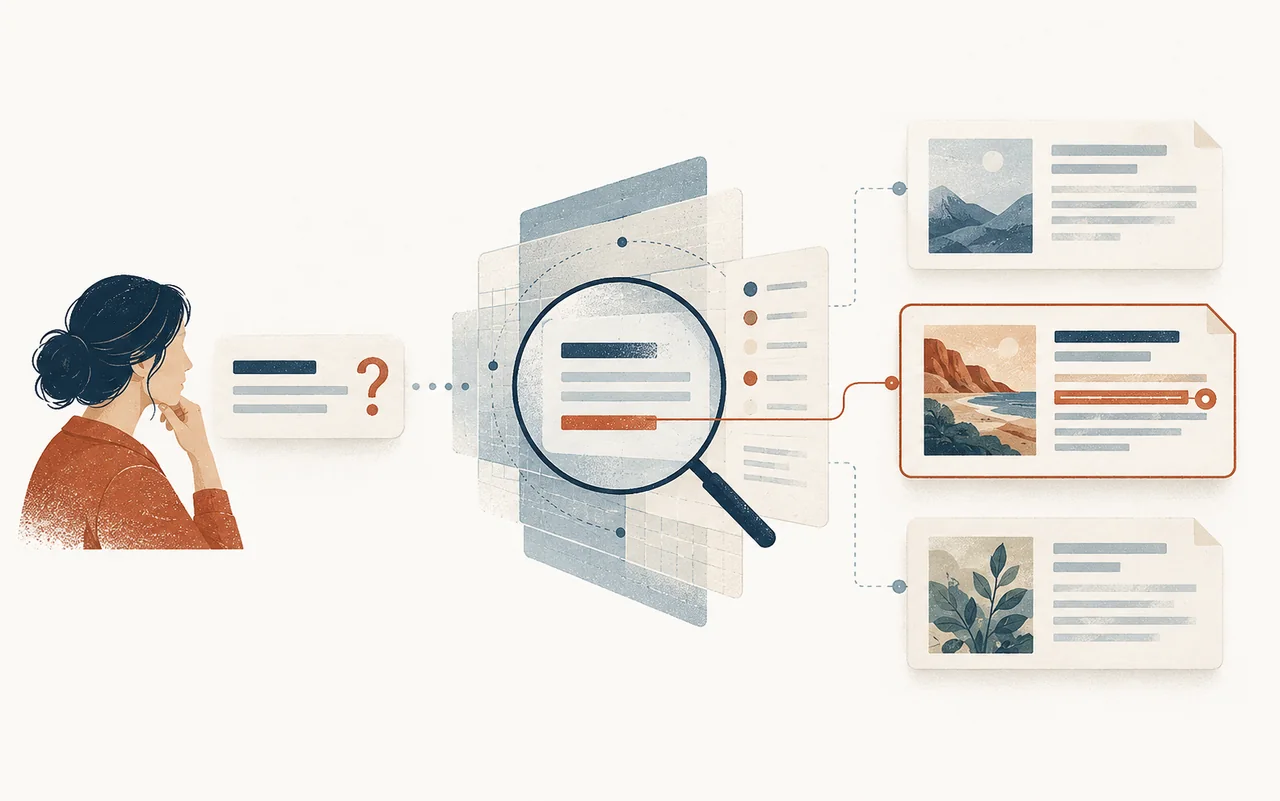
A brand mention is different from a clickable citation to a source page.
- 02
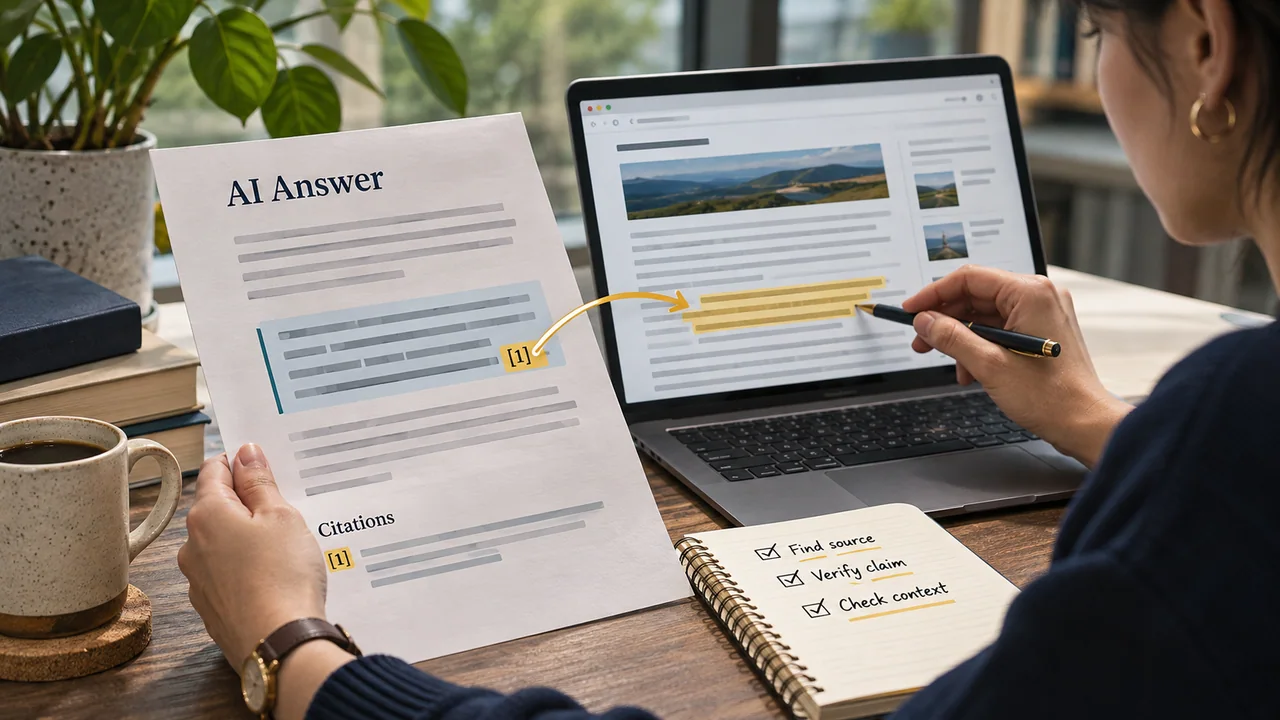
Open the cited URL and check whether its content supports the nearby answer claim.
- 03
Record tool, prompt and date; one observation does not represent all answers or establish cause.
Article tools
Read, review or take this article into your preferred AI assistant.Summarize with AI
Copies a prompt with this article’s canonical URL. Review the result and verify its sources.Clipboard unavailable · copy prompt manually
An AI answer may name a brand without linking to it, or show a citation that points to a page that only partly supports the answer. To evaluate a specific observation, inspect the linked page and the claim beside it. A citation in one response does not establish general visibility or explain why the system selected that source.
Separate a mention from a citation
Record whether the brand appears as plain text, whether a clickable source is shown, and which URL the source opens. These are different observations. If a response names Exendia but shows no source link, note mention without linked citation. If the answer contains no mention, that describes only the prompt and response you checked.
Check the cited page against the claim
Open the exact citation URL. Confirm the final page after redirects, identify the section that appears relevant, and ask whether it supports the answer’s specific statement. A page may be related to the topic without supporting every detail. Mark a source as supports, partly supports, does not support or unclear; retain the reasoning in a short note.
Also check entity identity. A citation to a similarly named company, a third-party profile or an outdated page should not be counted as an owned Exendia citation. If the URL is unavailable, preserve that state instead of assuming what it contains.
Keep a repeatable observation record
Record the product and mode, date, language or region if shown, exact prompt, answer snapshot, brand mention state, citation URL and source-check result. Keep the conditions stable when comparing later observations, but describe the sample as a limited set of checks. Product interfaces and answers can change.
OpenAI’s guidance for ChatGPT search recommends opening citations to review their sources and notes that search results and citations can be incomplete or incorrect. Treat a citation as a lead to verify, not as an automatic endorsement of the linked content.
Turn a mismatch into a careful next step
If a citation is outdated or does not support the answer, check whether the source page itself needs a factual correction. If another organization is cited, review the page that was selected and compare its relevance and clarity. These are hypotheses for content review, not proof that changing one page will alter future answers.
Exendia’s AI visibility service is the related commercial page. An assessment should report its prompt sample, tools and uncertainty rather than promising citations or placement.
Citation check record
| Field | What to capture |
|---|---|
| Prompt and tool | Exact wording, product and mode |
| Observation date | Date checked; preserve earlier runs separately |
| Mention | Brand text present, absent or ambiguous |
| Citation | Exact linked URL, or no link shown |
| Source check | Supports, partly supports, does not support, unclear |
| Notes | Entity mismatch, redirect, unavailable page or context |
Related reading: How to get cited in AI search and GEO versus SEO.
Evidence layer
References and further reading
Primary documentation used to review the technical concepts in this guide.- OpenAI Help CenterSearching the web in ChatGPT
Describes citations and the need to open and evaluate cited sources.
- OpenAI Help CenterDoes ChatGPT tell the truth? Accuracy and limitations