Read this first
Executive summary
3 operating principles- 01
E-E-A-T is a quality concept in Google guidance, not a standalone score or proven AI citation formula.
- 02
Make authorship, organization details and source evidence clear where they help readers verify a claim.
- 03
Describe third-party references only for what the source actually supports; do not promise entity recognition or citations.
Article tools
Read, review or take this article into your preferred AI assistant.Summarize with AI
Copies a prompt with this article’s canonical URL. Review the result and verify its sources.Clipboard unavailable · copy prompt manually
What E-E-A-T Can—and Cannot—Tell You About AI Search
E-E-A-T—Experience, Expertise, Authoritativeness and Trustworthiness—is a quality-evaluation concept in Google’s Search guidance, not a standalone score that publishers can add to a page. Google says trust is central and that E-E-A-T itself is not a specific ranking factor. This guide applies those principles cautiously to AI-search publishing: make authorship clear, show the basis for claims, keep identity details consistent and do not promise citations.
The practical aim is reader confidence and verifiable information—not a secret set of “AI entity signals.” For how to distinguish a linked source from an unlinked brand mention, see our ChatGPT citation guide and LEO operating framework.
What Is Known About AI Search Sources
Editorial evidence review
Different products can use model knowledge, search, retrieval or other tools. Their source selection and citation behavior is product- and mode-specific. Public documentation for one feature does not establish a shared mechanism or general authority signals across AI systems.
Entity Clarity and Its Limits
“Entity” is a useful way to refer to a distinct person, organization or thing. Publishers can make those identities and relationships clear to readers. The internal representations or selection rules of a particular AI product are not directly observable from a page or a single answer.
Use consistent, accurate names and descriptions on pages you control. Structured data should match visible content and follow relevant search documentation. These practices improve clarity and maintenance; their effect on AI discovery or citations is unverified unless a provider documents it.
For a practical starting point, compare this signal work with Exendia’s AI visibility and citation framework. Brands that need an implementation path can assess the AI Citation Pack — Authority and Digital PR Authority Links against the evidence available in their market.
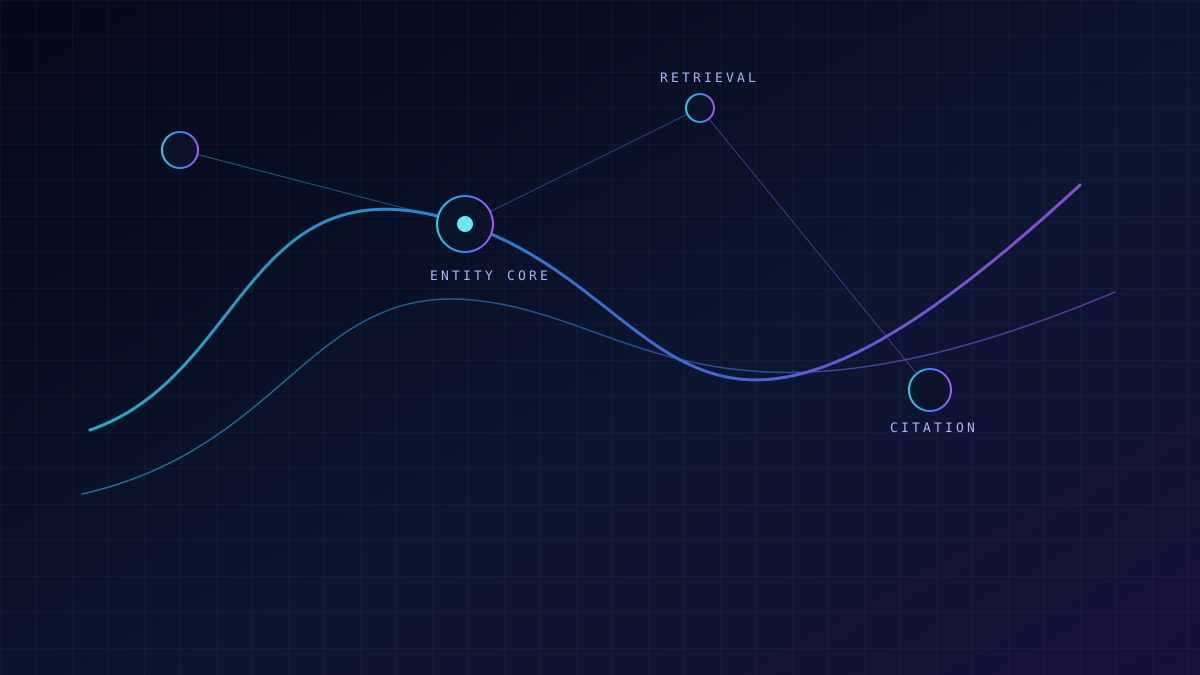
These are practical checks for people reviewing a page. The diagram does not describe a provider's internal system or establish citation effects.
Some providers document particular search and source features, but that is not a disclosure of every internal selection mechanism. Avoid interpreting a small set of answers as evidence of a ranking model or claiming that an editorial change increased citation probability.
Why Traditional E-E-A-T Optimization Falls Short
Author information, editorial policies and source citations can help readers evaluate a page. Google’s Search quality-rater guidelines are used to assess search quality; they are not direct page scores or a recipe for AI citations. How another product processes page context should be treated as unknown unless its provider documents it.
Do not assume which page elements a product fetched, retained or used in an answer. If a response displays a source, inspect the linked page and record only what the visible evidence supports.
Make Author Information Verifiable
Accurate author information helps readers understand who wrote a page and what experience or expertise is relevant. It does not automatically transfer credibility or guarantee how an AI product will represent that author.
Keeping Author Details Accurate
Keep bylines and biographies accurate. Link to professional profiles only when they genuinely belong to the author and help readers verify relevant information. Do not add credentials, affiliations or profile links that cannot be substantiated.
When author information appears on other sites, describe those references for what they demonstrate. Their presence does not prove that an AI system has connected the pages or changed its assessment.
Use structured data only when it accurately represents visible author information and follows applicable search documentation. Do not add sameAs links to unrelated profiles or claim markup makes an AI system merge identities.
Demonstrating Experience Through First-Party Content
The first E stands for Experience. Google’s guidance asks whether content demonstrates first-hand experience where relevant. No evidence here establishes a universal set of textual markers used by AI systems to detect it.
Case studies, original research and documented experiments can give readers useful first-hand detail when the method and limits are clear. Label observations accurately and do not claim that a product will recognize them as primary-source signals.
Document the steps taken, obstacles encountered and results observed. This gives readers a way to judge whether the experience is relevant; it is not an implicit credential or a documented AI matching signal.
Using Third-Party Sources Responsibly
Third-party coverage can provide independent context for readers when it is editorially earned and relevant. A mention, guest article or directory entry is not by itself proof of expertise, model training inclusion or an AI citation signal.
Contribute useful, accurate material where it serves the publication and its audience. Do not pursue mentions on the premise they will affect training data, retrieval or citation behavior.
Make Organizational Information Verifiable
Organizations should make their identity and important public facts easy for people to verify. There is no established universal checklist of organization signals that earns AI citations.
Describe the Organization’s Work Clearly
Describe the organization’s actual work and areas of expertise. Useful coverage should answer audience needs and be supported by evidence; this article does not claim that a particular number or breadth of pages creates entity recognition.
Use an overview page and supporting material when that structure helps readers navigate a subject. Original reporting or analysis should explain its method and sources. No citation probability follows from the structure alone.
Our topical authority guide treats topical authority as a planning concept, not a published Google score or AI outcome.
Use Structured Data Accurately
If using Organization structured data, follow current search-engine documentation and include only accurate properties. Google says no special schema is required for its AI features; this does not establish how other products use markup.
Choose a supported type only when it accurately describes visible content and is useful for a documented feature. Do not add types or properties simply to influence AI responses.
Valid markup can help eligible search features interpret supported page information, but it does not guarantee a rich result, ranking or AI citation. External corroboration requirements for AI systems are not documented as a general rule.
Information Readers Can Check
Clear ownership, contact details and editorial policies can help readers assess a publisher. Their effect on a provider’s internal assessment is not established here.
Publish qualifications, certifications, awards or memberships only when accurate, current and relevant; link to the issuing organization where possible. An About page should distinguish verifiable facts from positioning language.
Maintain business-directory details where those listings serve customers. Correct inconsistent name, address and phone data for accuracy and customer service; do not claim that inconsistency causes AI entity confusion without evidence.
Content Practices That Help Readers Verify Claims
Create useful content for the intended reader and support its claims. Citation behavior varies by product and mode; this article does not establish a content type that AI systems prefer.
Use Clear Structure for Readers
Use headings that accurately describe sections and organize complex information so readers can scan it. Do not present heading or paragraph placement as a proven extraction tactic.
Definitions can help readers when a term needs clarification. Place them where they make sense in the explanation and include context, exceptions and examples as needed. Their effect on AI citations is unverified.
Lists and tables can make comparisons easier to read. Use them when they clarify a real relationship, not to imply a machine-readable advantage that has not been established.
Document Original Work Carefully
Original reporting and research can provide value readers can inspect, especially when the method and limitations are described. There is no general rule that an AI system has an incentive to cite unique content.
If you publish survey results, datasets or experiments, state the sample, method, date and limitations, and make the underlying evidence available where appropriate. Do not claim an AI system must cite the work; providers and answer modes differ, and citation placement is not guaranteed.
Describe a framework only when it is useful to readers and clearly identify its author and scope. Do not promise that it will become a reference model or be cited.
For implementation support, review Exendia’s GEO and AI visibility services and compare the service scope with your own evidence and editorial needs.
Keep Time-Sensitive Information Current
Update content when facts, guidance or recommendations change. Google recommends helpful and reliable content; a visible update date alone is not evidence an AI system prefers or cites a page.
Use accurate dates and change notes when they help readers understand what changed. Do not imply timestamps establish freshness to a provider or improve citation preference.
Measuring What Can Be Observed
If an organization chooses to monitor AI answers, keep a reproducible record. Such observations do not reveal a hidden entity score or prove a causal effect.
Recording Search and Answer Observations
For a small observation sample, note the product, mode, exact query, date, answer and visible source links. Distinguish a brand mention from a linked source and a correct description. Do not generalize the sample to a platform as a whole.
Web monitoring can help find references for human review. Record source context and accuracy, but do not treat a mention as evidence a model processed it.
Search features such as Knowledge Panels or featured snippets are observations in Google Search. They do not establish how another AI product represents an organization or whether it uses the same underlying data.
Comparing Citation Observations Carefully
If testing, document the same query and mode over time and inspect each cited source. Report the sample and collection date; do not treat it as a complete or standardized platform measurement.
If the baseline is unclear, use the Exendia Growth Plan to structure an initial review of technical SEO, content coverage, authority, and AI visibility signals before selecting an execution package.
Comparing content changes is difficult because other product, query and index conditions can change. Label a result as an observation unless the study design supports a causal conclusion.
Responses may vary. Focus on accuracy, evidence and reader value; do not describe unmeasured changes as improved citation probability.
Rechecking Product Changes
Products and features change. Recheck provider documentation and record version or mode information when available. A change in visible answers does not by itself show an algorithm update or a changed signal weight.
Follow provider documentation relevant to the features in use. Do not infer unpublished tactical priorities from general product announcements.
Keep business information accurate across the channels the organization maintains for its audience. Do not claim that this provides resilience against unpublished algorithm changes.
FAQ
What is E-E-A-T and why does it matter for AI search?
E-E-A-T stands for Experience, Expertise, Authoritativeness and Trustworthiness. Google discusses it as a quality concept and says E-E-A-T itself is not a specific ranking factor. That guidance does not establish that other AI products use the same concepts or that E-E-A-T improvements increase citation probability.
How do AI search engines decide which sources to cite?
There is no single documented answer across products. Check provider documentation for a specific search feature and inspect visible sources in the mode tested. Internal selection mechanisms may not be disclosed.
Can I improve my E-E-A-T signals specifically for AI rather than traditional search?
There is no verified AI-specific E-E-A-T formula. Make authorship and organization facts accurate, support claims with suitable sources, and use markup according to documented search requirements. Treat effects on other AI products as unknown unless documented or measured with a suitable method.
How long does it take to build entity signals that influence AI citations?
There is no verified timeline for changes to affect an AI response. Record observations by date and product mode, and do not infer training inclusion or causal effect from a later mention or citation.
Evidence layer
References and further reading
Primary documentation used to review the technical concepts in this guide.- Google Search CentralCreating helpful, reliable, people-first content
Google describes E-E-A-T as a concept used by its systems and says E-E-A-T itself is not a specific ranking factor. Accessed 18 October 2026.
- Google Search CentralAI features and your website
Google says existing Search fundamentals apply to AI features and does not document a separate citation optimization formula. Accessed 18 October 2026.