Read this first
Executive summary
4 operating principles- 01
LEO is Exendia’s proposed planning model, not a provider standard or a documented citation formula.
- 02
Use it to review clear business facts, source support, technical access and the reader’s query.
- 03
Search and assistant products differ by mode; verify their current documentation rather than assuming shared behavior.
- 04
Record dated observations and keep them separate from claims about causation, training data or future visibility.
Article tools
Read, review or take this article into your preferred AI assistant.Summarize with AI
Copies a prompt with this article’s canonical URL. Review the result and verify its sources.Clipboard unavailable · copy prompt manually
Why Exendia Uses the LEO Planning Model
AI products may answer from model knowledge, use search or retrieval features, or combine several tools. Their behavior depends on the product, mode, query and date. Exendia uses LLM Engine Optimization (LEO) as a proposed planning model for reviewing a site’s factual clarity, evidence, technical access and observed responses. It is not an industry standard, a description of provider internals or a proven way to increase citations. For Google Search guidance, see our GEO and SEO comparison.
Defining the LEO Framework
In this guide, LEO means a set of questions Exendia uses to organize work around AI-assisted discovery. It does not promise a mention, retrieval, citation, ranking or entity recognition. It complements ordinary SEO and editorial review; it does not establish a separate set of ranking factors or explain how a provider’s systems work.
Origins and Conceptual Foundation
Some assistant experiences return a synthesized response, and some offer search or source links. The interface and source behavior differ by product and mode; a single description should not be applied to every query or version.
Model training and live retrieval are different processes. A site owner generally cannot verify whether a particular page entered a model’s training data or affected its learned associations. Where a product documents search or retrieval, check those controls and record the exact mode used. Do not infer training inclusion from a crawl, fetch or citation observation.
Core Principles of LEO
Three editorial lenses make the model practical: clear facts help people identify an organization or product; supported claims let readers inspect the evidence; and query relevance keeps a page focused on the question it serves. These are sound content practices, not verified inputs to a universal AI citation system.
These practices overlap with ordinary SEO and editorial quality work. SEO does not require keyword density, and no evidence here establishes that structured data or third-party placement increases AI citations across products. Use markup that accurately describes visible content and follows the relevant provider’s documented requirements.
LEO Planning Lenses
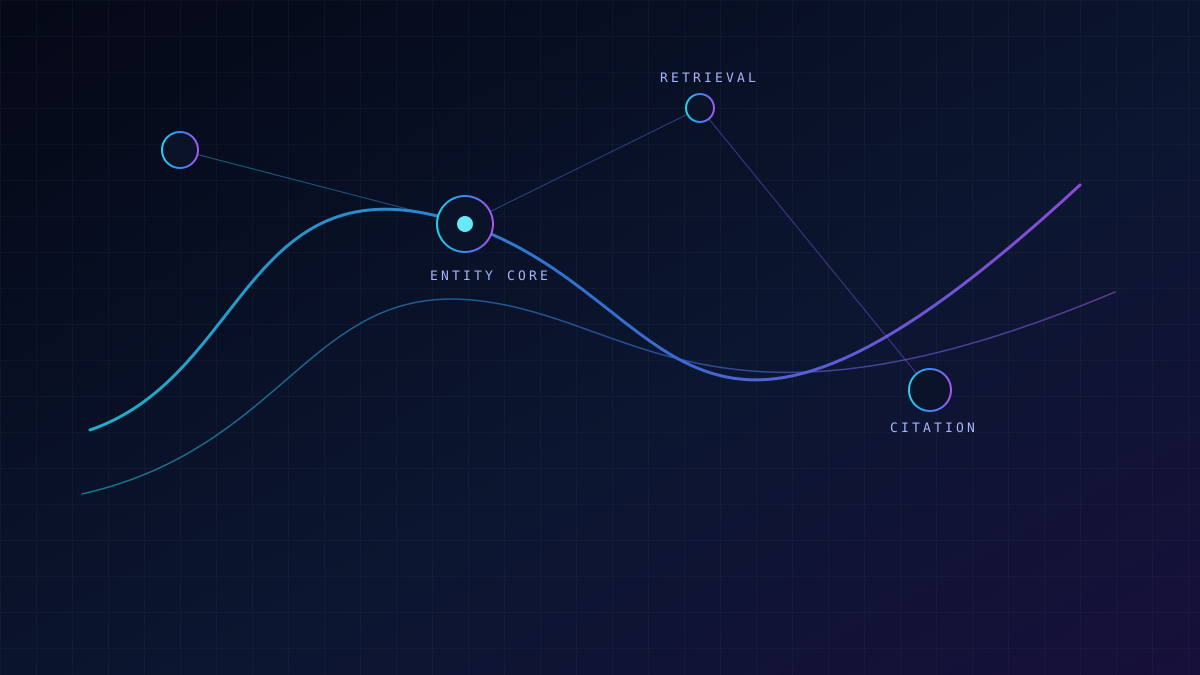
An illustrative planning model: review clarity, evidence and query relevance together. The connections are hypotheses for organizing work, not a measured provider system.
Reviewing Product-Specific Behavior
This section separates documented product behavior from assumptions. Provider documentation can describe specific crawlers, search tools or source displays; it does not establish a shared mechanism across all language models.
These connected concepts organize an audit; they do not describe a verified provider pipeline or prove that one change causes a citation.
Separate Model Knowledge from Search Features
A response from a model without search and an answer produced with a search feature are not the same kind of observation. Some products document search and source links for particular modes. For example, OpenAI documents ChatGPT Search and Google documents Search grounding for selected Gemini API workflows. Those sources support claims about the described features only; they do not show how every consumer mode works or establish that a publisher can influence source selection. Keep product, mode, prompt, date and visible sources with each observation.
Structured Data and Identity Information
Structured data should accurately describe the page and meet the requirements of the search feature for which it is used. Google says no special schema is required for its AI features. Whether other products use schema as an input is product-specific and should be treated as unknown unless documented. See the schema markup guide.
Keeping names, descriptions and organizational facts consistent on pages you control helps readers verify who a page is about and makes site maintenance easier. It does not prove that a model has formed a particular entity representation or will use that information in an answer.
Content Architecture for Readers
Write for the reader first. State important facts plainly, link claims to suitable evidence and retain qualifications that affect their meaning. There is no verified universal format that makes content more likely to be extracted or cited. Exendia uses this review as one part of its proposed LEO planning model.
Describe what an organization does, whom it serves and what evidence supports its claims. Seek third-party coverage only when it is editorially appropriate and earned; do not place information on a platform on the assumption that an AI product will treat it as authoritative.
This sequence helps teams document a test and interpret what they observed. It does not predict or cause retrieval or citation.
Name the product, feature and account context being checked.
Save the exact question and date so the observation can be repeated.
Open displayed sources and check what each one supports.
Separate a mention, a linked citation and an accurate description.
Compare like-for-like observations without inferring causation.
Check the Product and Mode You Mean
Do not generalize a feature from one product surface to another. Recheck the provider documentation for the specific feature and account used.
ChatGPT Optimization Considerations
OpenAI documents ChatGPT Search as a web-search experience that may include citations; placement is not guaranteed. Those documented Search behaviors do not describe every ChatGPT response. Our ChatGPT citation guide explains how to record and check visible sources.
Do not claim to know whether a page or mention was included in a model’s training data unless the provider supplies evidence for that specific case. A search citation is evidence of a displayed source for that answer, not evidence of training inclusion.
Perplexity and Retrieval-Augmented Systems
Perplexity publishes documentation for its search product and API. Use that documentation to understand the feature under test, then inspect the sources shown in the response. Do not assume its retrieval or citation behavior is shared by other products. Our use-case comparison of research tools describes the limits of that comparison.
Clear definitions, accurate comparisons and supported claims help readers evaluate a page. Whether a specific format changes a product’s retrieval or citation behavior remains unverified without evidence for that product and mode.
Provider documentation and visible responses are the evidence available to publishers. A crawl request or page fetch is not proof that a page informed an answer; inspect any visible citation and verify the linked source in context.
Claude and Other Assistant Features
Do not infer how Claude or another assistant selects sources from descriptions of its general model behavior. Check Anthropic’s current documentation for the particular search, connector or tool feature being evaluated. Keep observations product- and mode-specific; a small prompt sample is not a platform-wide result.
Gemini and Google Ecosystem Integration
Google documents Search grounding and citations for supported Gemini API workflows. That documentation does not establish that every Gemini app mode uses the same source pipeline or knowledge graph inputs. Test the exact feature in scope and do not infer behavior from Google Search rankings or a Knowledge Panel.
Strategic Planning Lenses
Beyond platform-specific tactics, the LEO framework includes strategic components that apply across all LLM optimization efforts.
Authority Building for AI Citation
This planning lens asks whether a claim has suitable evidence and whether a reader can inspect it. Do not treat backlinks, mentions or third-party placement as established signals for LLM training or retrieval. Our E-E-A-T and entity guide separates Google’s published guidance from AI-specific hypotheses.
Earned references may help people discover and assess a business. Pursue them for their direct audience and editorial value; do not promise that a model will see them or treat them as authoritative.
Semantic Consistency Across Touchpoints
Keep important facts consistent across the organization’s own pages and correct them when they change. This supports clear communication and maintenance. Internal model representations are not directly observable from that work.
Apply this to product names, features and service descriptions. If an assistant later describes a fact incorrectly, record the exact product, mode, prompt, response and date; do not assume which inconsistency caused it.
Query Mapping and Response Targeting
Query mapping identifies questions a site can answer usefully and accurately. It is a content-planning aid; it cannot determine which queries should mention a brand or induce a citation.
Write complete, fair descriptions for the reader. Avoid drafting language intended to be repeated by an assistant or implying that a desired response format can be controlled.
Use these steps to document work and observations. The sequence does not establish that a change caused a response difference.
Choose one audience question and the product mode to observe.
Save the prompt, date, mode and response conditions.
Check access, factual clarity, evidence and reader intent.
Make a justified reader-focused change and record why.
Repeat the observation and report limits on the comparison.
Limitations and Practical Challenges
No optimization framework operates without constraints, and LEO practitioners must acknowledge realistic limitations.
Unpredictability of LLM Outputs
One significant limitation of LEO is the inherent unpredictability of LLM outputs. Even with strong optimization, the same query may generate different responses at different times or for different users. This variability makes measurement difficult and prevents guarantees of specific outcomes.
Treat any change in observed mentions or citations as a result in the tested sample. Without a sound comparison design and adequate observations, do not attribute that change to a particular edit or call it increased citation probability.
Training Data Lag and Update Cycles
Providers do not generally disclose whether or when a particular public page enters a training dataset or changes a model response. Do not forecast training-data timelines from publication, crawler access or a later answer. Search or retrieval features are a separate path and should be described only from current provider documentation.
Cross-Platform Measurement Complexity
AI answer observations are not interchangeable with Search Console rankings or traffic. For a useful comparison, record the product, mode, exact prompt, date, sources shown and what you counted as a mention or citation. A small sample cannot represent an entire platform.
Exendia helps brands navigate LEO framework implementation through specialized monitoring and optimization services available in our LLM optimization marketplace.
Relationship to Traditional SEO
The LEO framework exists alongside traditional SEO rather than replacing it. Understanding this relationship helps practitioners allocate resources appropriately.
Complementary Strategies
Useful content, technical access and clear site navigation are reasonable foundations for people and search. Their effect on AI citations is not established by this planning model. Keyword research, performance work and links should be assessed against their documented search, usability or business purpose; do not label any of them as having no LEO value or as changing training inclusion without evidence.
Divergent Priorities
Different business goals can call for different content choices. Choose length and format for the reader’s task, and measure search traffic and product-specific AI observations separately. Do not assume a concise format is preferred by AI systems or that third-party placement improves citation outcomes.
SEO and LEO optimize different outcomes
Traditional SEO
- Search rankings and qualified clicks
- Crawlability and technical performance
- Keyword and backlink signals
Exendia’s LEO planning model
- Clear facts about the organization
- Evidence readers can inspect
- Product-specific observations with limits
A Practical SEO and AI Visibility Audit
Use this model as an audit sequence. Start with technical access: check that important pages resolve correctly, use their intended canonical URLs, can be reached through useful internal links and are not unintentionally blocked. For Google Search, follow its current technical requirements; do not infer that passing a check means another product fetched or used a page.
Next, review content for the reader. Map questions the page is meant to answer, check important claims against sources, and look for duplication or unclear language. Use structure that helps people scan and verify information; do not present a heading or answer format as a retrieval trick.
Then review source quality and any external references for their actual relevance and support. Do not treat mention counts or third-party coverage as model signals. Record what is documented, what is an interpretation and what remains unknown.
If monitoring is useful, test a small, documented query set in named products and modes. Check factual representation and inspect visible sources. Repeat the same method after material changes, while noting product or version differences and the limits of a small sample.
The result should be a prioritized plan with owners and evidence: verified access fixes, content improvements justified for readers, and a repeatable observation log where monitoring is useful. Exendia’s AI Visibility Stack and Growth Plan audit describe available service paths; neither is evidence of a particular platform outcome.
Future Considerations for LEO Practice
Products and documentation change. Recheck the relevant provider sources before describing a feature or behavior as current.
Evolving Retrieval Mechanisms
Use current provider documentation to distinguish search, browsing, connectors and model behavior. Do not forecast a shift between training and retrieval from a small set of answers.
Multimodal AI and Brand Representation
When a product supports image, video or audio inputs relevant to your audience, review its documented requirements and test that specific feature. Do not assume a text-page recommendation transfers to other media.
Regulatory and Transparency Developments
For legal or policy requirements, verify current primary sources for the relevant jurisdiction and obtain appropriate review. This article is a content-planning guide, not regulatory advice.
FAQ
What is the LEO framework for LLM optimization?
LEO is Exendia’s proposed planning model for reviewing factual clarity, source support, technical access and observations from selected AI products. It is not a provider standard or a proven method for increasing citations.
How does LEO differ from traditional SEO?
Traditional SEO can be measured with search-specific tools. This article uses LEO to organize a separate review of named AI products and modes. Do not infer training-data presence or citation causation from a visible response.
Which AI platforms require LEO optimization?
No provider requires “LEO optimization.” If you monitor ChatGPT, Gemini, Perplexity or Claude, check the documentation for the exact feature and record its behavior separately.
How long does LEO optimization take to show results?
There is no verified general timeline for an edit to affect an AI answer. Publication, crawling, indexing, training and visible citation are different events. Record dated observations; do not forecast training inclusion or response changes.
Evidence layer
References and further reading
Primary documentation used to review the technical concepts in this guide.- Google Search CentralIntroduction to structured data markup in Google Search
- OpenAIWeb search tool guide
- PerplexitySearch guide